Truck Mounted Forklift Online Course
$99.99 CAD
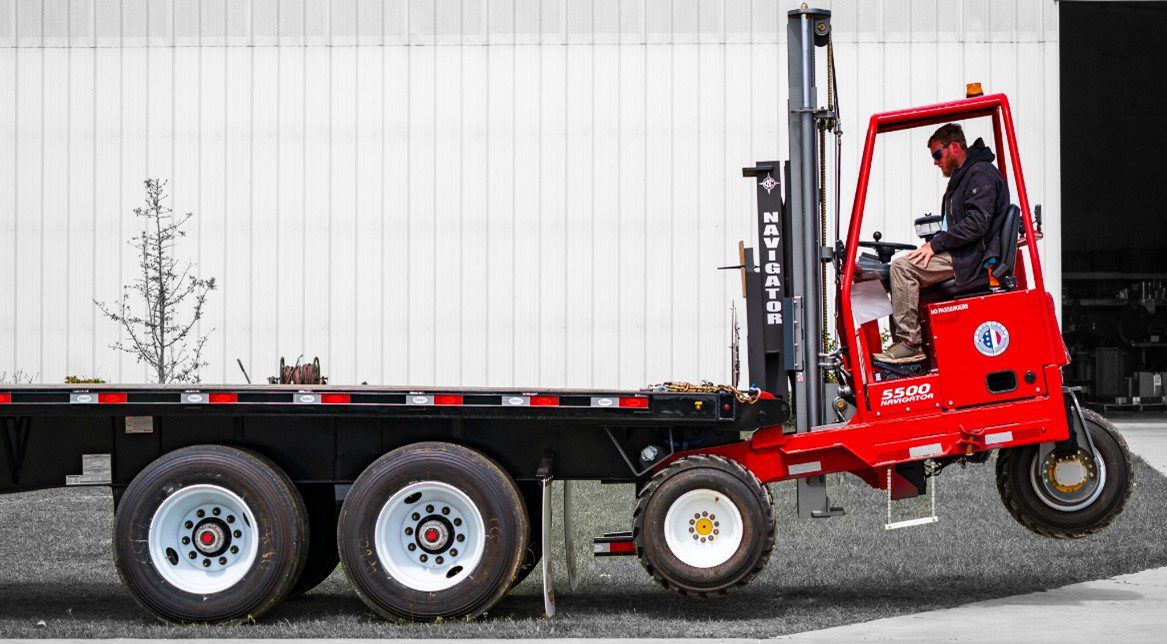
This Truck Mounted Forklift Online Course is designed for Canadian workers, operators, and supervisors who rely on this versatile equipment every day. Whether you're delivering materials to job sites, navigating tight spaces, or working in dynamic environments, truck-mounted forklifts (often called Moffett Trucks) present unique operational and safety challenges. This course will provide you with the essential theory knowledge to operate a truck mounted forklift safely, comply with Canadian occupational health and safety regulations, and reduce the risk of incidents and injuries. By the end of this training, you will understand key hazards, safe operating procedures, inspection requirements, and your responsibilities as a competent operator in Canada.
In this Truck Mounted Forklift Online Course, participants will learn:
Anatomy of a Truck-Mounted Forklift (Moffett Truck)
This section introduces learners to the major components and systems of a truck-mounted forklift. Participants will gain an understanding of how each part contributes to safe and efficient operation. Topics include the mast, forks, carriage, hydraulic system, outriggers, engine or power source, controls, and mounting system on the truck. Emphasis is placed on recognizing normal vs. abnormal wear, understanding load-handling capabilities, and becoming familiar with manufacturer terminology and specifications.
Exterior Inspections
Learners will be trained on how to conduct a thorough pre-use exterior inspection in accordance with Canadian safety standards and manufacturer guidelines. This includes checking tires and wheels, forks and attachments, mast chains, hydraulic hoses, lights, warning decals, and structural components. The section also covers identifying visible damage, leaks, or defects that could compromise safety, and outlines proper reporting and documentation procedures.
Interior Inspections
This module focuses on the operator’s compartment and control systems. Participants will learn to inspect seat condition, seatbelt functionality, control levers, pedals, gauges, warning indicators, and safety devices. The importance of ensuring proper visibility, mirror adjustment (if applicable), and functional operator presence systems will also be covered. Learners will understand how to identify faults before operation and the importance of removing unsafe equipment from service.
Stability
A critical safety topic, this section explains the principles of forklift stability, including the stability triangle, centre of gravity, and load dynamics. Learners will explore how factors such as uneven terrain, load weight and height, slope operation, and sudden movements can affect stability. Real-world scenarios will be used to demonstrate tip-over risks and how to prevent them through proper operating techniques.
Personal Safety
This section highlights the operator’s responsibility for personal safety and the safety of others on the worksite. Topics include required personal protective equipment (PPE), safe mounting and dismounting procedures, maintaining three points of contact, and awareness of pinch points and crush hazards. The module also addresses fatigue, distractions, and the importance of maintaining situational awareness in busy or high-risk environments.
Know Your Machine
Operators will learn the importance of understanding the specific truck-mounted forklift they are using. This includes reviewing the operator’s manual, understanding load capacity charts, recognizing machine limitations, and knowing proper startup and shutdown procedures. Differences between models and attachments will be discussed, along with the importance of only operating equipment for which the worker has been trained and authorized.
Know Your Worksite
This section prepares learners to assess and adapt to different work environments. Topics include evaluating ground conditions, overhead hazards, weather impacts, traffic flow, and pedestrian interaction. Learners will also review safe delivery practices, communication with spotters, and hazard identification. Emphasis is placed on planning lifts, maintaining safe distances, and complying with site-specific safety rules and Canadian OHS requirements.
This training encompasses the following OHS standards for Sit-Down Forklifts:
- CAN/CSA-B335-04 – Safety Standard for Lift Trucks
- CAN/CSA-B335-94 – Lift Truck Operator Training
- CAN/CSA-B352.0-09 – ROPS, FOPS
Testing
This Truck Mounted Forklift Online Training Course offers updated study materials and information for participants.
Reviews and testing will take place throughout this course, What is the passing mark to earn the certificate of completion in the Aerial Work Platform Training Online Course? Participants must achieve a mark of 80% or higher to earn their certificate of completion in this Truck Mounted Forklift Online Training Course. Can participants retake the Truck Mounted Forklift Online Training Course if they don’t pass? Those who do not secure the required mark will be allowed to repeat the Truck Mounted Forklift Online Training Course two additional times.
Certificate of Completion
Participants who successfully pass the Truck Mounted Forklift Online Training Course will earn a certificate of completion, which they can print out or download for their records.
Top 10 Safety Requirements for Truck Mounted Forklift (Moffett Truck) Operation
1. Operator Training and Competency
All operators must be properly trained and deemed competent under applicable provincial OH&S regulations and CSA standards (e.g., B335). Training must include both theory and practical evaluation specific to truck-mounted forklifts—not just standard forklifts.
2. Pre-Operational Inspection
A complete inspection must be conducted before each use. This includes:
- Forks, mast, and chains
- Hydraulic hoses and fittings
- Tires and wheels
- Lights, alarms, and decals
- Mounting system to the truck
Any defects must be reported and the unit removed from service if unsafe.
3. Understand Load Capacity and Limits
Operators must know and never exceed the machine’s rated load capacity. This includes understanding:
- Load charts
- Load centre distances
- Effects of attachments and uneven loads
4. Maintain Stability at All Times
To prevent tip-overs:
- Keep loads low to the ground while traveling
- Avoid sudden stops, sharp turns, and uneven terrain
- Do not operate on slopes beyond manufacturer limits
- Understand centre of gravity and stability principles
5. Use Proper Mounting and Dismounting Techniques
Always maintain three points of contact when getting on or off the machine. Never jump from the forklift. Ensure the unit is stable and secure before dismounting.
6. Wear Required Personal Protective Equipment (PPE)
Operators must wear appropriate PPE, such as:
- High-visibility clothing
- Safety boots
- Hard hat (where required)
- Gloves and eye protection as needed
7. Ensure Safe Worksite Conditions
Before operating, assess the work area for:
- Uneven or soft ground
- Overhead hazards (wires, structures)
- Pedestrian traffic
- Weather conditions (wind, rain, ice)
Never operate in unsafe or unassessed environments.
8. Maintain Clear Visibility and Safe Travel Practices
- Always look in the direction of travel
- Travel in reverse if the load blocks forward view
- Keep a safe distance from people and obstacles
- Use a spotter when visibility is limited
9. Secure the Machine During Mounting/Dismounting and Parking
When not in use:
- Lower forks to the ground
- Set parking brake
- Turn off the engine
- Ensure the unit is properly secured to the truck when remounting
10. Never Lift or Carry People
Truck-mounted forklifts are designed for materials only. Never:
- Lift people on forks or pallets
- Allow passengers on the machine
- Use the forklift as a work platform unless specifically designed and approved